Google’s move to Accelerated Mobile Pages (AMP) was a very intelligent business move which will prevent users from switching away from mobile web browsing towards native apps. These lighting fast loading pages (housed in Google’s own cache) will keep users engaged with Google search on smartphones. Google will be throwing a lot of weight behind 2017 and I expect to see a lot of development (functionality, education, technology and support) in this area – especially in the first quarter of the financial year.
AMP is like a diet version of HTML. The pages load fast – 85% faster to be exact! https://t.co/u2NzvSoXxi @AMPhtml pic.twitter.com/w0tqRUV8dm
— Hilton Johani (@hiltonjohani) January 3, 2017
I received this email this morning from Google, and the warning message was to basically fix all my AMP related issues which they detected in my GSC.

Message
Fix errors on your AMP pages

To: Webmaster of https://www.hiltonjohani.com/,

Google systems have detected that some of your AMP pages do
not meet our guidelines and will therefore not show in Google
Search AMP-related features. The following report provides
examples of pages with errors:
Upon clicking on the CTA in the email, I was taken to my Search Appearance > Accelerated Mobile Pages report in Google Search Console. I only invested in AMP during the Christmas holiday and so far 18 of my AMP pages are indexed in Google. I have 14 pages with non-critical errors and none with critical errors (thank God). Though I admit when I started I had 4 major errors and I forgot to take a screenshot to document my AMP journey.

I perfectly understand why Google raised an orange flag on 14 of the 18 pages already indexed. I made the mistake initially and I will correct the “invalid structured data element” on these pages latest by tomorrow. I know exactly what is required and its an easy fix. I am pretty chuffed as my pages have already started appearing on the SERP, with the AMP signal. Here is one of my results.

Note that you a user will be directed to a cached version of my AMP page – not the responsive version. (See address bar).
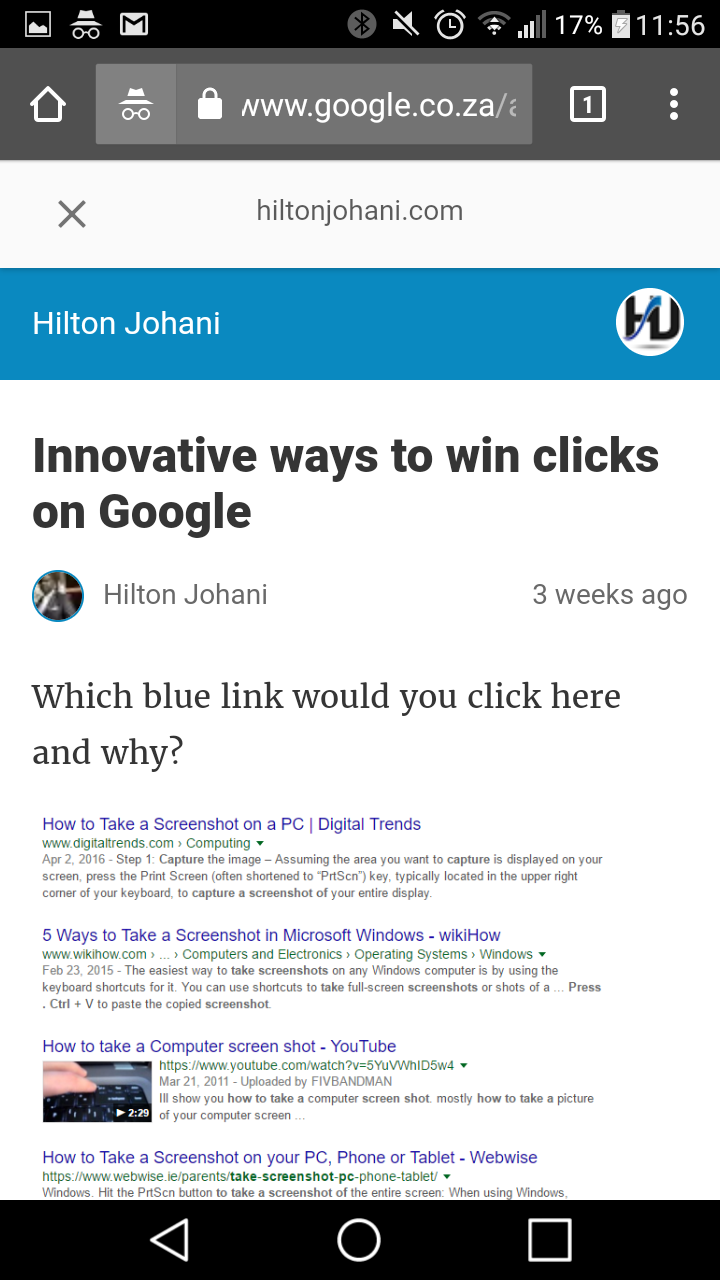
You will notice AMP pages are actually served from Google’s own cache and this isn’t the usual URL serving method. Google says this enables them to serve the pages to users a lot faster – 85% faster to be exact. There is a discussion going around in the SEO community, were most feel Google should direct users to the publishers AMP page rather than their own cache. I personally see this is another “click hoarding” tactic as Google tries to keep users within its own property, instead of passing the user over to the publisher. Whatever it is AMP is here to stay and I recommend that Webmasters invest in this relatively young technology or else risk losing to competitors who have already started building these page.