A Hash tag is a metadata tag (type of label) mostly used on social network sites (e.g. Facebook) and micro blogging sites (e.g. Twitter). They help users identify messages with a specific topic or content. One can easily create these labels by simply placing the hash tag character # in front of a word.
The majority of people usually place hashtags in the main text of the message or near the end. Searching for a hashtag will then bring up all messages tagged with it – thus creating searchable links.
Hashtags rapidly developed to be an essential part of how we communicate on social networks. They help us categorize things that we are talking about, stuff that we are tweeting, or pictures that we are instagramming. Hashtags allows marketers to monitor and track what consumers are saying about their brands, as well as their competitors.
However, this lovely tag is suffering a bit of abuse as a lot of people are using it incorrectly. I thus wrote this article to help licence future “hashtagers” and hopefully have happier tags out there.
Do : Use Industry specific hash tags to join in on conversations

Don’t: Please don’t hashtag every word in your post. It’s rather annoying

Do : Keep it simple. Try and use less than 3 hashtags in a post. 2 is best
@StandardBankZA #UCount clients get *2.5-5% #RewardsPoints on purchases at #TigerWheelnTyre. Visit: http://t.co/cWnnxKF1pD *Tc&Cs apply. — Tiger Wheel & Tyre (@TigerWheelnTyre) August 12, 2015
Don’t: Avoid putting hashtags on random phrases. Absolutely no one is going to click on this.

Do: Always try and create a hashtag for your business or for an event you are hosting – (or attending, but chances they will have one already). It’s a simple easy way to engage and organize content your guests or consumer are posting.
It’s that time of year again! Are you ready (and booked) for The 5th Annual #MarketingIndaba? http://t.co/ykcl3IaAiD
— Marketing Indaba (@MarketingIndaba) February 16, 2015
Don’t: Avoid Hashtagging the same word in every post. – While this is good when promoting your brand, it tends to get old real quick. 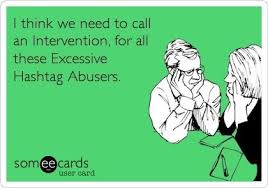
Do: Use capital letters to distinguish between the different words in a phrase – it makes it easier for people to read.
An FNB Channel Islands account – an offshore account you can manage locally http://t.co/WM5WYobJMr #FNBChannelIslands pic.twitter.com/PzcYjTtxah — FNB South Africa (@FNBSA) August 12, 2015
Don’t: Separate words with spaces or any other type of punctuation, like commas, question marks, etc. they don’t work in a hashtag
